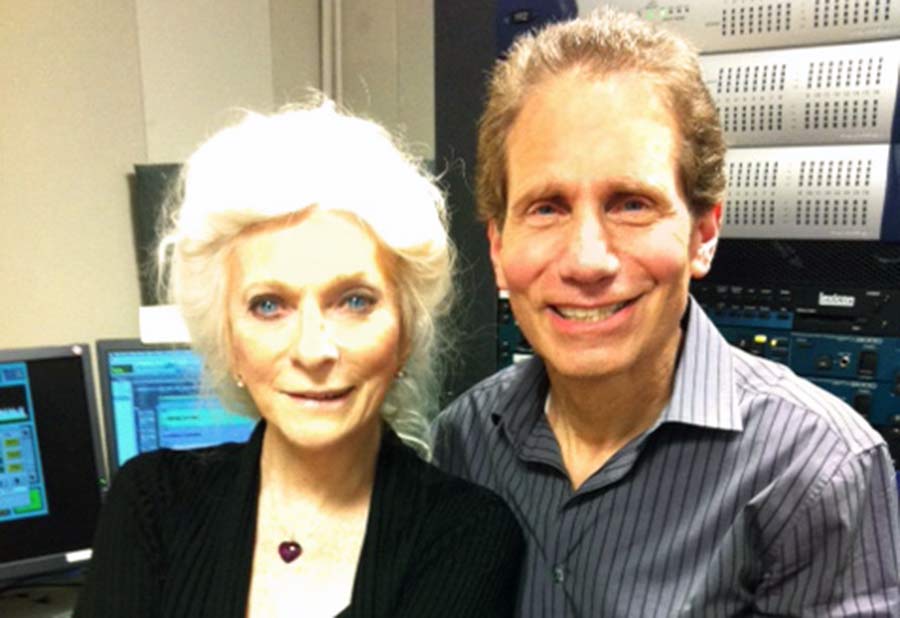
Judy Collins
There really was a Sweet (Suite) Judy Blue Eyes and she’s got plenty of her own stories to tell. Judy Collins emerged from the early 60’s folk scene and with the release of her 1967 album Wildflowers soon became one of the most prominent artists of the era. In addition to writing her own memorable songs her distinctive interpretations of Leonard Cohen and Joni Mitchell’s compositions greatly helped in introducing their music to a wider audience. She continues to tour and record and will be celebrating her career in an upcoming PBS special. Her recent autobiography is actually called Sweet Judy Blue Eyes – My Life in Music and so I took the opportunity to find out just why Stephen Stills wrote that song for her.
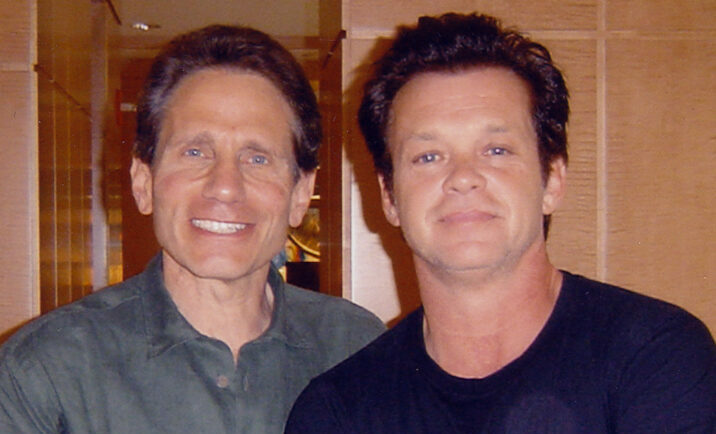
John Mellencamp
“I Need a Lover” by John Cougar (not Mellencamp at the time) was one of my favorite records of 1979. I became friendly with John, introduced him to NY on-stage at the Bottom Line and our relationship grew throughout the years. Combining commercial success with social activism (and helping to establish Farm Aid), John’s never been shy to speak his mind on a variety of subjects. When we sat down to discuss his 2003 album Trouble No More, he offered some surprising insights into how he viewed his own celebrity and we shared a mutual passion for an old 45 RPM single.
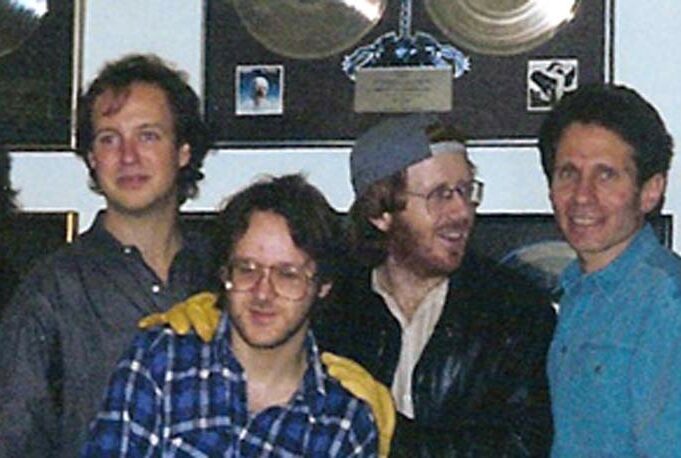
Vintage Fresh Phish 1994
Formed at the University of Vermont in 1983 Phish emerged by the 1990’s as the most popular of a new generation of Jam Bands. Often compared to the Grateful Dead for their improvisational concert style and a fervent fan base that followed them across the country, they mixed rock, folk, jazz and funk into a sound that was ever-changing until their 2004 break-up. Five years later they’ve reunited for a triumphant reunion tour and a brand new album Joy.
Their album Hoist had just been released when they visited me on April 13, 1994 for a lunchtime in-studio mini-concert and interview. Trey Anastasio, Page McConnell, Mike Gordon and Jon Fishman were in good spirits as they prepared for their first ever show at New York’s Beacon Theatre that night. Trey (who does most of the talking) explores the band’s history, his recently broken foot, the possibility of a Snapple commercial and more in this memorable clip.
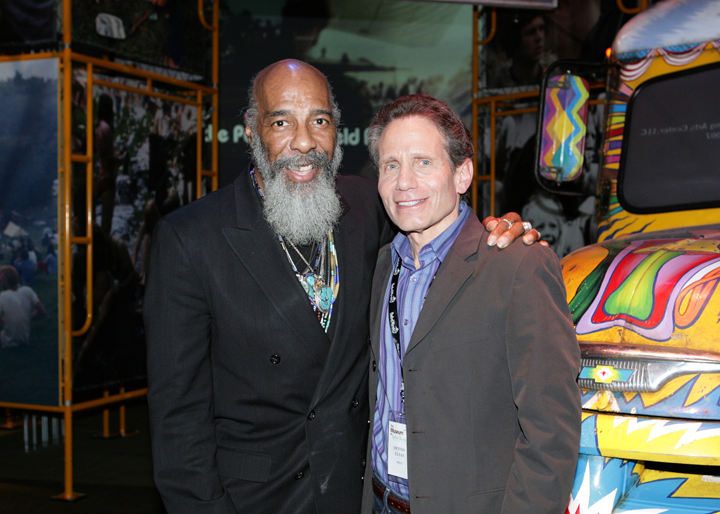
Richie Havens
The first time I ever met Richie Havens was in May 1968. I was working at my campus station WQMC (Queens College) and he was a rising folk-star and a staple of the newly blossoming FM airwaves. We talked at his manager’s office on East 55th Street and it was the first artist interview I ever did for the radio. It would be over a year later in August 1969 that a much larger audience would be introduced to him and experience his musical power as he electrified the opening of the Woodstock Music and Arts Festival.
We met and spoke many times through the years after that both on and off the air.
In May 2008 (40 years after that initial interview) I was hosting an event for the opening of the Museum at Bethel Woods (on the site of the Woodstock Festival). It was the perfect opportunity to ask Richie just how he happened to become the opening act of the Festival.
Just a few months later we were together again. This time it was in Studio A at WFUV, as Richie was promoting his newly released album Nobody Left to Crown, telling stories, performing live and making everyone that met him that day feel just a little bit better. His recent passing, on April 22, 2013, has left a great void not only in the musical world but also among his many fans and friends who experienced his positive and spiritual energy.
Listen to that complete show here.
Ben Folds
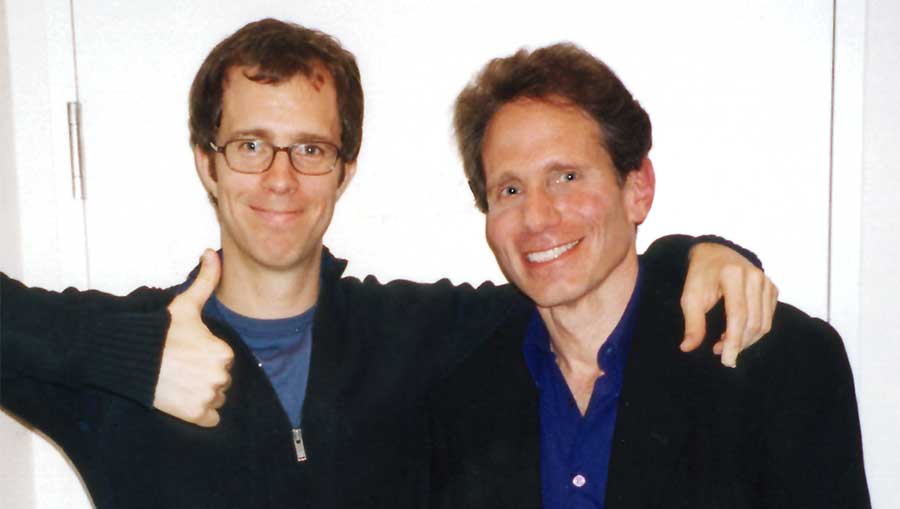
The first time I met Ben Folds in Dec 2001 he was just starting out on a brand new chapter of his career. His three piece band Ben Folds Five had achieved significant critical and commercial success from 1995-2000 but now he was going to try it as a solo performer. He had come to WFUV to promote his newly released album Rockin’ the Suburbs. Just the night before he had performed to an enthusiastic sold-out crowd at New York’s Bowery Ballroom for the first time in a long time without a band. “Since maybe I was twelve” he joked with me.
The interview went well and it would be the first of several sessions that I had with Ben on-the-air including a great broadcast from the The Museum of Television and Radio. I wound up introducing him live at venues ranging from Roseland to Radio City Music Hall and appearing as the opening announcer for his Ben Folds Live album.
The last ten plus years have been busy and eventful for Ben. There have been a series of solo albums, tours, assorted musical projects, a few marriages, and a very successful stint as a judge for the NBC TV a-capella competition show The Sing Off. Recently he reunited with the original members of Ben Folds Five to record a brand new album and this summer they will be be out for a full nationwide tour.
I really enjoyed this first meeting and Ben and his piano sounded terrific in live performances of both old and (at the time) new songs. We explored his musical influences ranging from Little Richard to Elton John, the challenges of being a new father, and I tried to be diplomatic in finding out just why the original band had broken up.
Dion
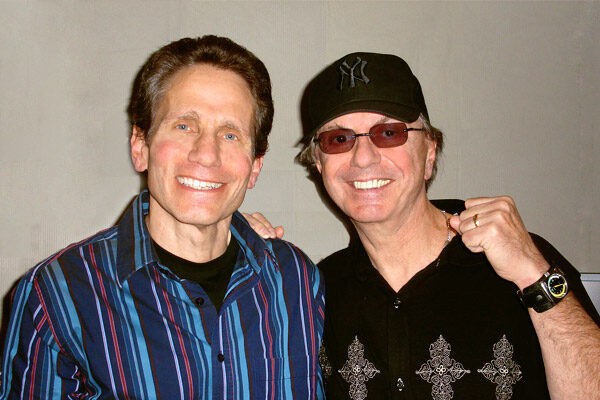
Dion is a rock ‘n’ roll original. Born Dion Francis DiMucci and raised in the Bronx, NY he initially achieved fame with the distinctive doo-wop sound of the Belmonts in the late 1950’s. Dion’s career rose to a higher level after going solo in 1960 with hits like “Ruby Baby,” “Runaround Sue,” and “The Wanderer.” Like many American rock singers his star faded a bit in the mid-60’s, but resurged in 1968 with the success of the very timely “Abraham, Martin and John.”
I would have been excited to talk with Dion in almost any location, but to have him and his guitar sitting across from me in WFUV’s Studio A (in January 2006) just a few blocks away from the Little Italy section of the Bronx where he had grown up, was truly magical. We talked about the neighborhood, his early love for Hank Williams, country music, and the influence of the blues and how that all came together in the release of his then latest album Bronx In Blue. What was even more fun for me were his stories of how some other musical threads and sounds had influenced some of my favorite “oldies but goodies.” Take a listen.
Click here to listen to the full audio.

Donovan
Donovan Phillips Leitch was born in Scotland in 1946 and moved with his family to the outskirts of London when he was ten. With Scotish and English folk music as his early influences, he dropped out of art school to pursue life on the road as a musician. His early success with the acoustic based songs “Catch the Wind”, “Colours” and “Universal Soldier” had some calling him the British Bob Dylan. Joan Baez and Pete Seeger introduced him to American audiences at the 1965 Newport Folk Festival.
Teaming up with successful pop producer Mickie Most, Donovan’s records took on a new sound and he had his first #1 hit with “Sunshine Superman” in 1966. It was the same year that he became the first well known British pop star to be busted for possession of marijuana. With the follow-up hit “Mellow Yellow” and it’s line “electrical banana is gonna be a sudden craze” fueling the myth that smoking dried banana skins could make you high, Donovan was labeled as a poster child for the hippie drug culture that had emerged. Though he would eventually move past that image, it did serve as part of the inspiration for one of his most memorable songs “Season of the Witch”. We talked about it when I interviewed him in July 2004 promoting his latest album Beat Café.
Ronnie Spector
She had that unmistakable voice and pioneered a rock ‘n’ roll style and look all her own.
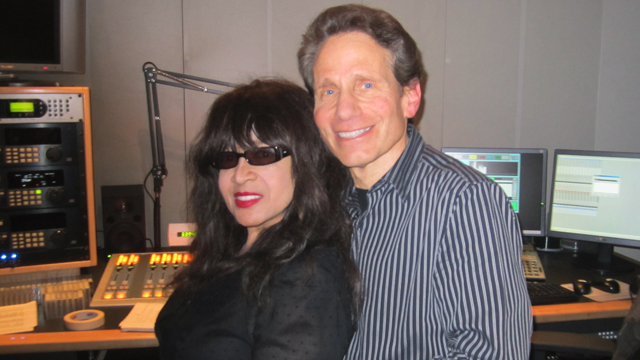
Veronica Bennett burst onto the pop music scene in 1963 with one of the greatest pop records of all time, “Be My Baby.” As the lead singer of the Ronettes and a cornerstone of producer Phil Spector’s “Wall of Sound,” their music leaped out of your transistor radio with hits like “Baby I Love You” and “Walking in the Rain.” She married Phil in 1968 and officially took the name Ronnie Spector, but that union almost ended her career because of Phil’s strange and often violent behavior.
Eventually she got out of the marriage and slowly made her way back to performing and recording. The 1980’s found her working with Bruce Springsteen, “Little Steven” Van Zandt, Southside Johnny and many other industry admirers. Her hard work cumulated in 1986 with the Top 5 hit “Take Me Home Tonight” – a duet with Eddie Money- which re-introduced her to a loving audience. She recently created a multi-media show “Beyond the Beehive” to tell her own story in words and music and vintage memories.
When we talked in December 2010 she was just beginning to plan that new show and told me of her earliest influence, Frankie Lymon. I finally had the opportunity to tell her how much the Ronettes appearance in an early 1960’s Murray the K holiday concert had meant to me as part of the experience of attending my first live Rock ‘N’ Roll show.