Rick Derringer with his band The McCoys had a #1 hit with “Hang on Sloopy” in 1965.
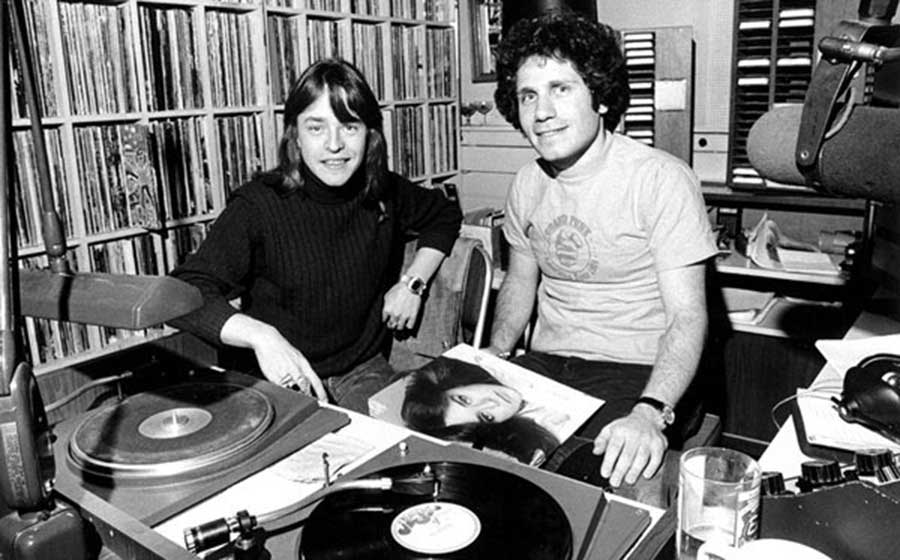
He went on to work and play with Johnny and Edgar Winter in the 70’s, and produced Edgar’s biggest hit “Frankenstein.” In 1973 his solo career took off with “Rock n Roll Hootchie Koo” and in 2010 he was a member of Ringo’s “All-Starr Band.” On April 11, 1975 he stopped by WNEW-FM to promote his new album Spring Fever. Among the many things we discussed, was his decision to re-record “Sloopy.”
Rick Nielsen and Tom Petersson first recorded together in 1968 as the band Fuse with limited success. Returning to their home town of Rockford, Illinois in the early 70’s, they joined with drummer Bun E. Carlos and vocalist Robin Zander to form Cheap Trick. Their 1977 debut album was well received in the US, but in Japan they quickly became superstars. Capturing the energy and excitement of their live shows, the album At Budokan (released initially only in Japan in 1978, and in the USA in 1979), provided the spark for their American breakthrough.
Nearly thirty years later the original group is still recording, touring and supported by a loyal and enthusiastic fan base. The band is heard nightly around the world with the theme to TV’s The Colbert Report and That 70’s Show.
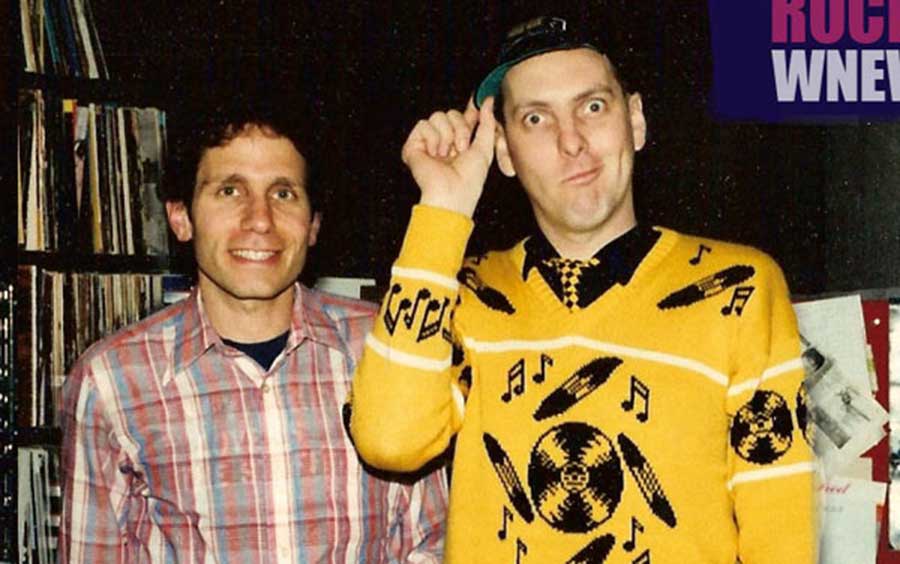
In this 1980 conversation with Rick Nielsen, we discuss the early days of opening for Kiss, their Japanese appeal, and several of their greatest hits.
The Animals from Newcastle-upon-Tyne, were part of the musical “British Invasion” of the mid-sixties, and responsible for some of that period’s greatest hits. The original lineup of Eric Burdon, Alan Price, Chas Chandler, Hilton Valentine, and John Steel, were only together for two years. Alan Price left in 1965 and Chas Chandler departed the group in 1966 after which he helped to establish the career of Jimi Hendrix as his manager.
Eric, the distinctive lead vocalist, would remain as the band’s leader and together with a successful solo career would continue to keep the group’s name alive.
Throughout the years there were several reunions of the original members and the final one occurred in 1983. They recorded a new album Ark, went out on tour, and visited my show on July 22, 1983 when I spoke with Eric about their biggest hit.
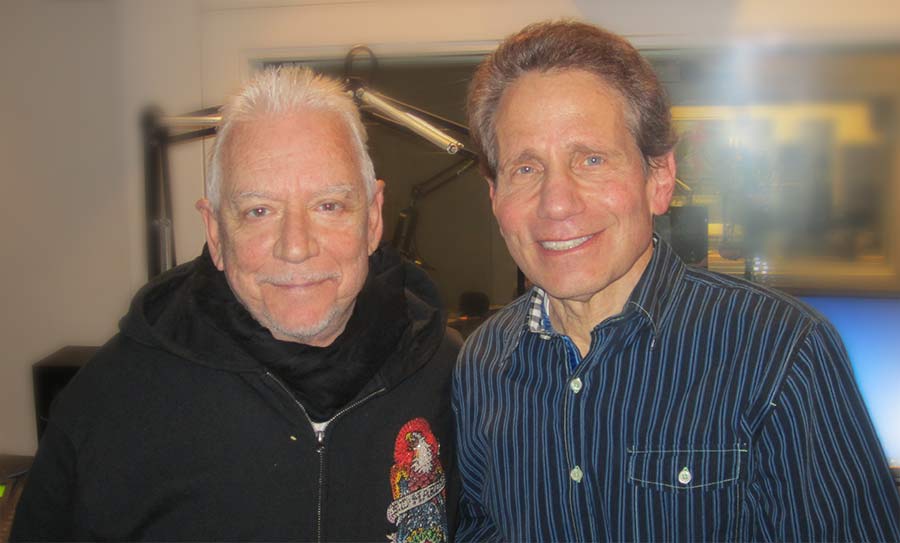
Nearly thirty years later in February 2013, I got to speak with Eric again. This time he was promoting a new solo album ‘Til Your River Runs Dry. On this latest project he’s performing mostly original compositions, but when he was recording with the Animals their earliest successes were written by others. He explained how one of them was actually intended for Nina Simone.
Flo and Eddie are actually Mark Volman and Howard Kaylan, but they’re better known as the lead vocalists of the Turtles. When the group split in the early 70’s, Mark and Howard took on the identity of Flo and Eddie, began touring with Frank Zappa and created a whole new act that incorporated rock satire with their music. Their annual Christmas week shows at New York’s Bottom Line became a Holiday tradition and so did their visits to my show. During their appearance in December of 1978 they recalled how they were participants in a bit of rock n roll history forever immortalized in a Deep Purple song.
When I spoke with PF Sloan in the summer of 2006 he had just released Sailover his first new album in more than thirty years. There had always been an air of mystery surrounding his life and career and so I wasn’t quite sure what to expect from our conversation. I was very intrigued to meet the man who wrote “Eve of Destruction”, one of the biggest hits of 1965 and still one of the defining protest songs of the era. He was also the co-writer with Steve Bari of some of my favorite pop songs of the 60’s including “You Baby” for the Turtles, “A Must to Avoid” by Herman’s Hermits and “Secret Agent Man” recorded by Johnny Rivers.
We talked about the new album and some of the guests that appeared on it including Lucinda Williams, Buddy Miller, and Frank Black. He was candid but cautious in providing the stories behind the songs both old and new, just adding a bit more to the mystery of his legacy. Bringing along his guitar he played a few songs from the new album and treated us to a wonderful live version of “Secret Agent Man.”
In the early 70’s Jimmy Webb wrote and the Association recorded the song “PF Sloan” which wondered aloud where had he gone. PF must have wondered also, since he was never able to find further fame and recognition within the emerging singer-songwriter scene. I was very sad to learn of his death from pancreatic cancer on November 15, 2015 at the age of 70.
When Randy Bachman was my guest on December 7, 1974 – his group BTO (Bachman-Turner Overdrive) had emerged over that year as one of the most successful new bands of the era. Having just scored their first number one hit with “You Ain’t Seen Nothing Yet”, they were in New York to play a sold out show at an unusual venue.
They were booked as the first group (and maybe the last) to play the NFE – a short-lived attempt in re-opening the legendary Fillmore East. As Randy explained it to me, the last time he had played in New York (four years earlier) had been at the original Fillmore, as a founding member of his earlier band the Guess Who. He liked the idea of returning to the same place to celebrate BTO’s success. We talked about a lot of their music, including this song (released just six months earlier) that was already taking on an anthem-like status.
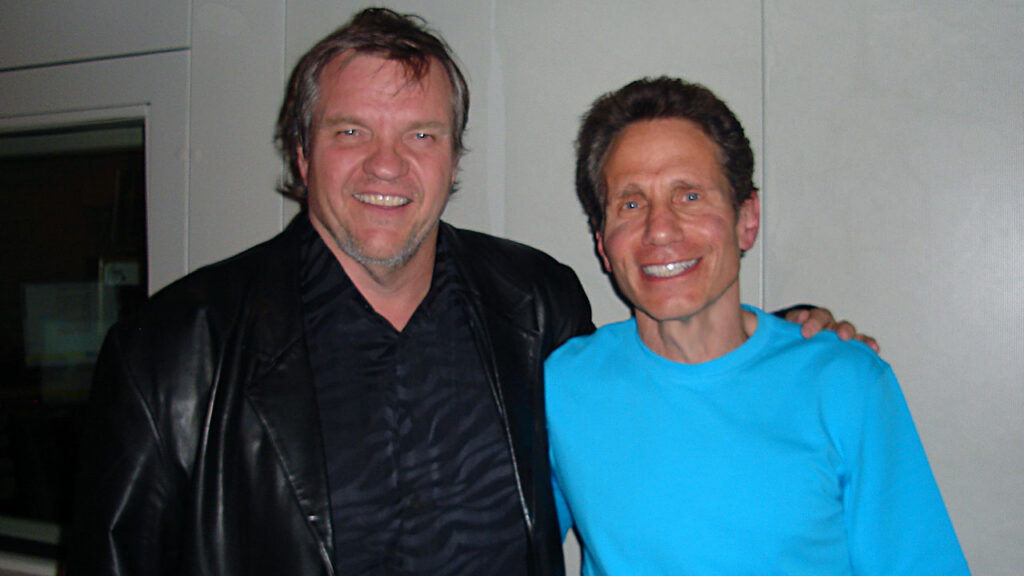
I interviewed Meat Loaf for the first time for WNEW-FM in 1977 when the original Bat Out of Hell was released. With the amazing success of that album, Meat (or Mr. Loaf as the NY Times once referred to him) and his songwriting partner Jim Steinman had created an instant rock classic. Shortly after its release, we sat down in a New York recording studio to explore this diverse collection of theatrical rock ‘n’ roll produced by Todd Rundgren. Among other things, I wanted to find out how New York Yankee legend Phil Rizzuto had become a pivotal part of “Paradise By the Dashboard Light.”
Nearly thirty years later (Aug 2006) Meat Loaf and I would sit-down again, only this time it was at WFUV as he was about to release Bat Out of Hell 3. He was funny, gracious and wonderfully candid about his remarkable journey as an actor and musical performer. He was truly one of a kind. I was very sad to learn of his recent passing on Jan 20, 2022 at age 74.
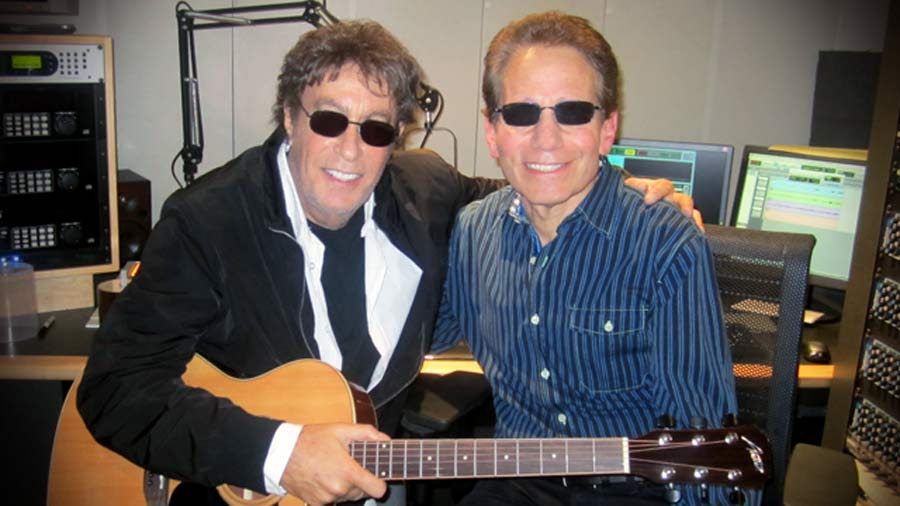
In 1975 I received a record at WNEW-FM that I immediately fell in love with. It was “Looking For an Echo” by Kenny Vance, a track off his first solo album Vance 32 that paid tribute to the doo-wop era, but with a contemporary sound. I didn’t know much about Kenny’s background other than he had been part of a very successful 60’s group, Jay & The Americans.
The album came and went, but the song always stuck with me. A few years later I learned that Kenny had been music producer and supervisor for a film I had just seen about the life of the legendary disc jockey Alan Freed, American Hot Wax.
Kenny’s group “The Planatones” would emerge from a fictional group that was portrayed in the film, but it would take fourteen years for that to happen. During that time he was involved with an assortment of musical projects including “Saturday Night Live” and the films Eddie and the Cruisers and Animal House.
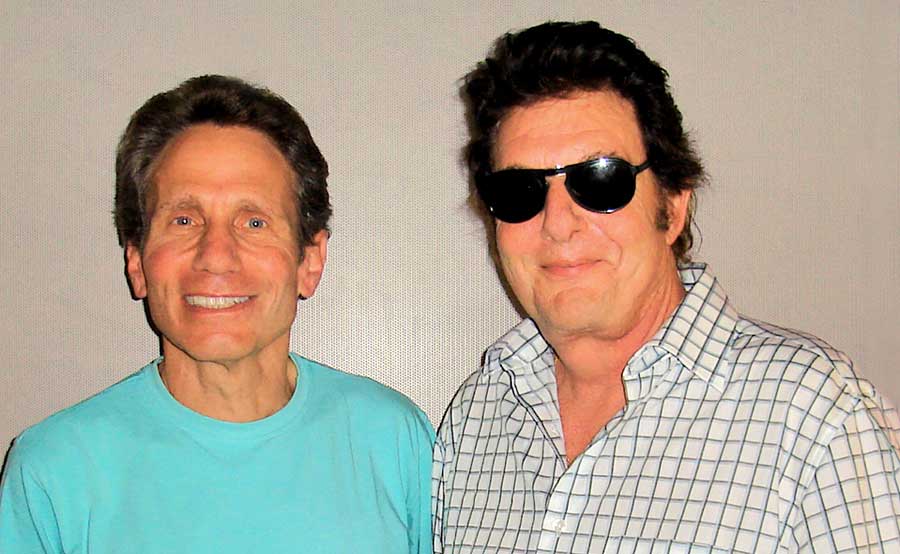
Today Kenny and the Planatones maintain a busy touring schedule with a wonderful show that evokes the musical spirit of the 50’s and 60’s and brings us up to date on the endless search for that perfect echo. Their new album is called Acapella I finally got a chance to get the complete story behind the song and clarify who exactly was Jay in Jay & The Americans when we spoke in December 2012.
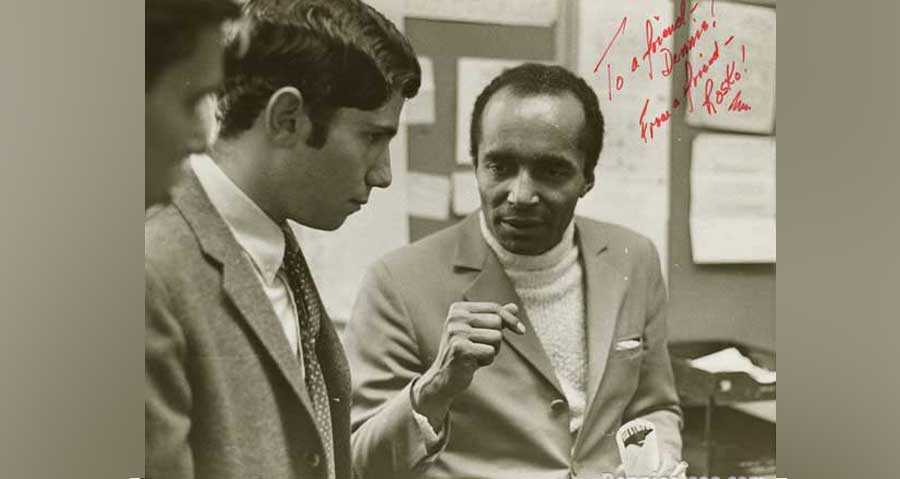
This photograph was taken on October 17, 1967. The young, earnest looking guy in the tie is me – then program director and disc jockey at my college radio station WQMC (Queens College).
I’m listening to Rosko, who had emerged over 1966 as one of the most admired and unique radio personalities on the new FM scene. He had been part of NY’s first progressive rock station – WOR-FM – and I invited him to speak to the students on-campus. A month earlier we had picked the date, but in the interim he had resigned from WOR-FM and told me on the phone he was switching to WNEW-FM. He asked if he might bring his new general manager, George Duncan, along. He thought it would give George the opportunity to get a sense of what the college audience WNEW-FM was looking to reach was all about. It was a great afternoon and this picture brings it all back for me.
I always appreciated the irony that nine years later in May 1976 I would take over the same nighttime shift as one of my first FM mentors. In retrospect, I must have paid careful attention to whatever he was telling me that day.
Two weeks later, WNEW-FM’s transition was underway. A year earlier they had adopted a format as the first station in NY with all female DJs, playing music that was a type of light rock often referred to as “chicken rock”. Alison Steele, the only one of the DJ’s who would stay with the station and later become famous as “the Nightbird”, is explaining what’s about to happen on October 30, 1967.
“I grew up listening to you,” I told Scott Muni the first time I met him in June 1971. Scott was the program director at WNEW-FM, and I was hoping to make a good first impression on my job interview. His response was a bemused vocal grunt, which I would later learn was Muni verbal shorthand for almost anything. I (and most of the staff) would subsequently spend many years mimicking that sound and his unique gravely voice, in our never ending game of admiration and imitation of our Boss.
I really had grown up listening to him. From New York’s powerhouse AM Top 40 stations WMCA and WABC, to the brave new world of progressive FM rock (initially at WOR-FM before he came to WNEW-FM on December 18th, 1967), I was a fan.
Initially he hired me as a part-timer for summer relief. Within six months I became the station’s music director working directly for and with him, an experience that was an amazing education in the world of rock radio and the music industry. He played hard and he played to win, but he always had fun and mostly success in doing so.
We worked together through 1997 up until the final dismantling of the once proud place “Where Rock Lived.” All through the years, he never let me forget that first comment about growing up listening to him and was always amused when he began to hear the next generation of listeners tell me the same thing about myself.
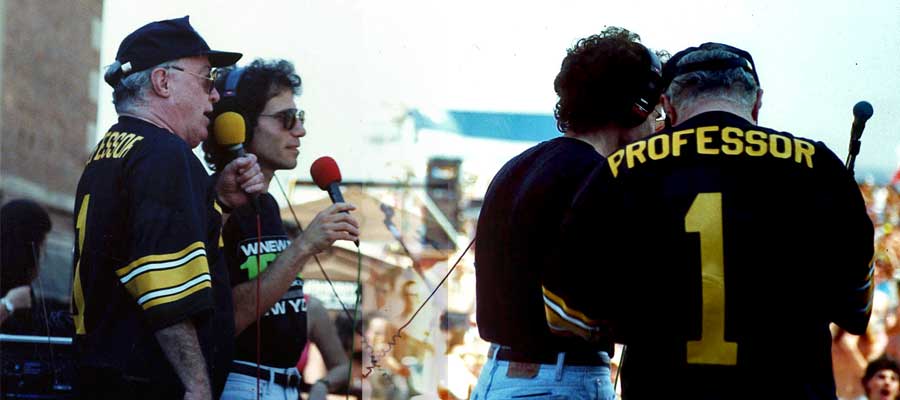
I don’t remember that he or anyone else within the station actually referred to him off-air as “The Professor.” It was a nickname given to him sometime in the mid to late 1980’s by one of the many programming consultants that kept trying to re-shape our sound. We preferred “Fats” – a loving term of endearment that he often used for almost anyone that played on his team.
This audio is from April 30th, 1979. It was WNEW-FM’s final night broadcasting from our legendary studios at 565 Fifth Avenue just before our facilities were to move across town. I’m doing my nightly 6-10PM show and have invited “Scottso” to sit in for awhile following his afternoon shift and share some memories with me and our loyal WNEW-FM audience. Here’s an audio snapshot of that moment in time: